

Whether you’re managing a competition horse, helping an older equine recover from stiffness, or looking for a non-invasive solution to reduce inflammation, equine light therapy pads are gaining traction for good reason. These devices use targeted red and near-infrared (NIR) light wavelengths to support healing at a cellular level—stimulating blood flow, reducing pain, and helping your horse recover faster from everyday wear or specific injuries. Unlike medications or injections, light therapy pads work naturally with the horse’s body to energize cells, without the risk of side effects. Veterinarians, trainers, and owners have started integrating them into warm-up routines, injury rehab protocols, and even for preventive maintenance before shows or workouts.
This is not hype. Multiple studies and real-world case examples are showing measurable results, from improved muscle balance to decreased joint inflammation. With a growing number of equine rehab centers using red light therapy alongside chiropractic care and massage, the approach is becoming a go-to for smart, evidence-based care.
Equine Light Therapy Pad: Benefits & How It Works
In this guide, we will explain what an equine light therapy pad is, how it works, the science behind it, benefits, and how to use it correctly for optimal results.
1. What Is an Equine Light Therapy Pad?
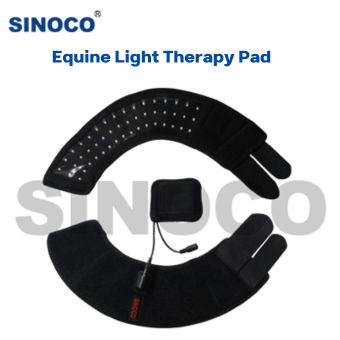
An equine light therapy pad is a rollable, LED‑lined wrap designed to be placed directly on specific areas of a horse’s body—joints, muscles, hocks, back, etc. It uses two precise wavelengths: red light (~660 nm) for surface-level treatment (wounds, acupuncture points) and near‑infrared light (~850 nm) for deeper penetration into muscles, tendons, and joints.
These pads produce a targeted energy dosage—around 9–10 J/cm² in approximately 15 minutes, calibrated to meet tissue absorption needs. They are battery-powered or corded with timers that automatically shut off after the session. Sizes range from small to large, and include Velcro straps for secure attachment .
2. How It Works — The Science, Not the Hype
Light therapy operates on the principle of photobiomodulation (PBM)—a process where specific light wavelengths activate cellular mechanisms:
- Photon absorption
- LEDs penetrate skin and are absorbed by cytochrome c oxidase in cellular mitochondria.
- Increased ATP production
- This improves the cell’s energy output, accelerating healing and repair.
- Improved circulation & lymphatic flow
- Light stimulates new capillaries and lymph vessels, increasing nutrient delivery and waste removal.
- Reduced inflammation and pain
- Nitric oxide release causes vasodilation, while endorphins are triggered to ease discomfort.
- Enhanced tissue regeneration
- Light boosts collagen, RNA/DNA synthesis, fibroblast activity, and phagocytosis—all essential for repair.
3. Evidence and Case Studies
Clinical and observational evidence supports the use of equine LED pads:
- Tissue regeneration & inflammation control: Studies demonstrate that red/NIR LEDs improve circulation, decrease oxidative stress, and accelerate healing in tendons, ligaments, skin, and muscle.
- Depth-targeted effects: Dual-wavelength usage ensures surface benefits (red light) and access to deeper tissues (NIR light).
- Veterinary application: Many equine rehab vets use these pads as a no-risk adjunct alongside therapeutics like massage or chiropractic care.
- Non-invasive, drug-free: Pads show no significant side effects, and horse owners report effective, gentle treatment.
4. Real-Life Outcomes and Veterinary Insight
Veterinarians and trainers use these pads to:
- Prepare muscles before intense workouts.
- Reduce swelling and increase circulation post-exercise.
- Integrate into rehabilitation for strained tendons, ligaments, and minor injuries.
- Complement physiotherapy, chiropractic, massage, and controlled exercise .
Professionals note consistent improvements in mobility and comfort—especially in performance or older horses—citing calming muscle tension and reducing soreness.
5. Core Benefits at a Glance
| Benefit | Mechanism | Notes |
|---|---|---|
| Pain & inflammation relief | Nitric oxide vasodilation & endorphin release | Reduces dependence on NSAIDs |
| Accelerated wound healing | Increased collagen synthesis & angiogenesis | Faster re‑epithelialization |
| Muscle soreness and recovery | ATP boost + fluid movement → less stiffness | Great post-exercise |
| Tendon/ligament healing | Deeper penetration via NIR; cell activation | Frequently used in rehab |
| Skin & minor condition support | Surface red light treatment | Ideal for hot spots, dermatitis |
| Stress reduction | Gentle warmth + soothing release of calming chemicals | Useful for anxious animals |
6. How to Use the Pad Effectively
Dosage & Timing
- ~15 minutes per area delivers ~9–10 J/cm².
- Acute phases: twice daily, 6 hours apart.
- Maintenance: use 2–3 times per week.
Placement & Positioning
- Apply to clean, dry skin.
- Wrap securely with included straps; don’t overtighten.
- Cross‑tie horses or treat them comfortably in stalls.
Treatment Checklist
- Identify affected area (muscle, joint, tendon).
- Place pad directly on skin.
- Set timer and begin session.
- Remove after completion and observe the horse for any reaction.
7. Safety & Limitations
Safety
- Non‑invasive and drug-free with no documented side effects .
- Use eye protection, especially with NIR light, and avoid shining into eyes.
- Do not use over tumors or a pregnant mare’s abdomen without vet advice.
- Be cautious with photosensitive medications, such as tetracycline.
Limitations
- Not a sole treatment: Should complement—not replace—veterinary medical care, especially for infections, fractures, or serious orthopedic issues.
- Individual response: Some horses may show noticeable improvements; others less so.
- Research gaps: While promising, red light therapy is still considered adjunctive; more large-scale equine trials are needed.
8. Choosing the Right Therapy Pad
Checklist for selecting a pad:
- Dual-wavelength LEDs: 660 nm + 850 nm for both surface and deep tissue.
- Adequate power output: ≥ 100 mW/cm² to reach deep tissues.
- Correct size: Smaller pads for joints, larger for back/muscles.
- Built-in timer: Ensures consistent dosage.
- Durability & safety: Waterproof casing, quick-release cord, eye protection recommended.
- Battery options: Rechargeable for field use or corded for barn use.
Brand examples:
- According to Gospel (USA-made, dual-wavelength, 15‑min auto-timer) .
- Platinum Light‑Ease, Otto, RevitaVet—specialized equine pads available.
9. A Realistic Protocol Example
Here’s how to incorporate the pad into a week-long care plan:
Goal: Manage recurring hock stiffness in a performance horse.
- Day 1: Pre-exercise
- 15 minutes on hock + gaskin to pre-warm tissues.
- Day 1: Post-exercise
- 15-minute session on same area to curb inflammation.
- Day 2 & 3: Rest days
- 15 minutes twice daily if stiffness or swelling persists.
- Day 4–7: Maintenance
- 15 minutes every second day to support recovery and function.
Expected outcomes:
- Noticeable reduction in stiffness after 3 sessions.
- Maintained mobility over competition period.
- Ongoing benefit when integrated with proper farrier, massage, and vet support.
Frequently Asked Questions
1. How long should the pad stay on?
Standard sessions last 10–15 minutes per area, delivering effective ~9–10 J/cm².
2. Can I use it on any horse?
Yes, but avoid use over tumors, foal growth plates, or a pregnant abdomen without veterinary guidance .
3. Is daily use safe?
Yes, but it’s typically limited to max twice daily, with 6‑hour intervals. Maintenance use is 2‑3 times weekly .
4. Should I shave hair?
Not necessary; trimming enhances penetration, especially through thick coats .
5. Can I use it with medications?
Yes, but always consult a vet if using photosensitive drugs .
6. Does it replace veterinary care?
No. It complements vet treatments but does not replace essential medical care .
7. Any risk of burns?
Unlikely. LEDs are gentle and power-output is calibrated, but monitor the horse and avoid overtightening.
8. When will I see results?
Muscle soreness and mild inflammation: 1–2 weeks. Tendon or deep tissue issues may require ongoing use over several weeks .
9. Can I use it before competitions?
Yes. It’s used to warm muscles and reduce stiffness as part of pre-event preparation .
10. What can’t it treat?
Does not treat fractures, deep infections, significant lacerations, or severe internal issues—veterinary intervention needed.
Conclusion
Equine light therapy pads provide a practical, non-invasive solution to support your horse’s physical health and performance. Backed by the science of photobiomodulation, these pads use red and near-infrared light to activate natural healing processes—boosting cellular energy, improving blood flow, and easing inflammation and discomfort. Whether you’re dealing with post-exercise soreness, chronic stiffness, or simply want to support faster recovery, these pads fit easily into a regular wellness routine.
They are safe for most horses when used correctly, offer measurable benefits without side effects, and can be used alongside traditional veterinary treatments or rehab protocols. Key to their success is consistent, targeted use—delivering the right dose to the right area at the right time. From warming up before competition to managing minor injuries and muscle fatigue, they’ve become a trusted tool for equine owners, therapists, and veterinarians alike.
In short, equine light therapy pads offer convenience, science-backed support, and flexibility—helping keep your horse moving comfortably and performing at their best.